
AI Function: Transforming conventional sectors towards eco-friendliness
In a world where the complexities of AI integration demand a balanced perspective, recognising both potential and challenges, AI is making significant strides in revolutionising traditional industries like manufacturing and agriculture.
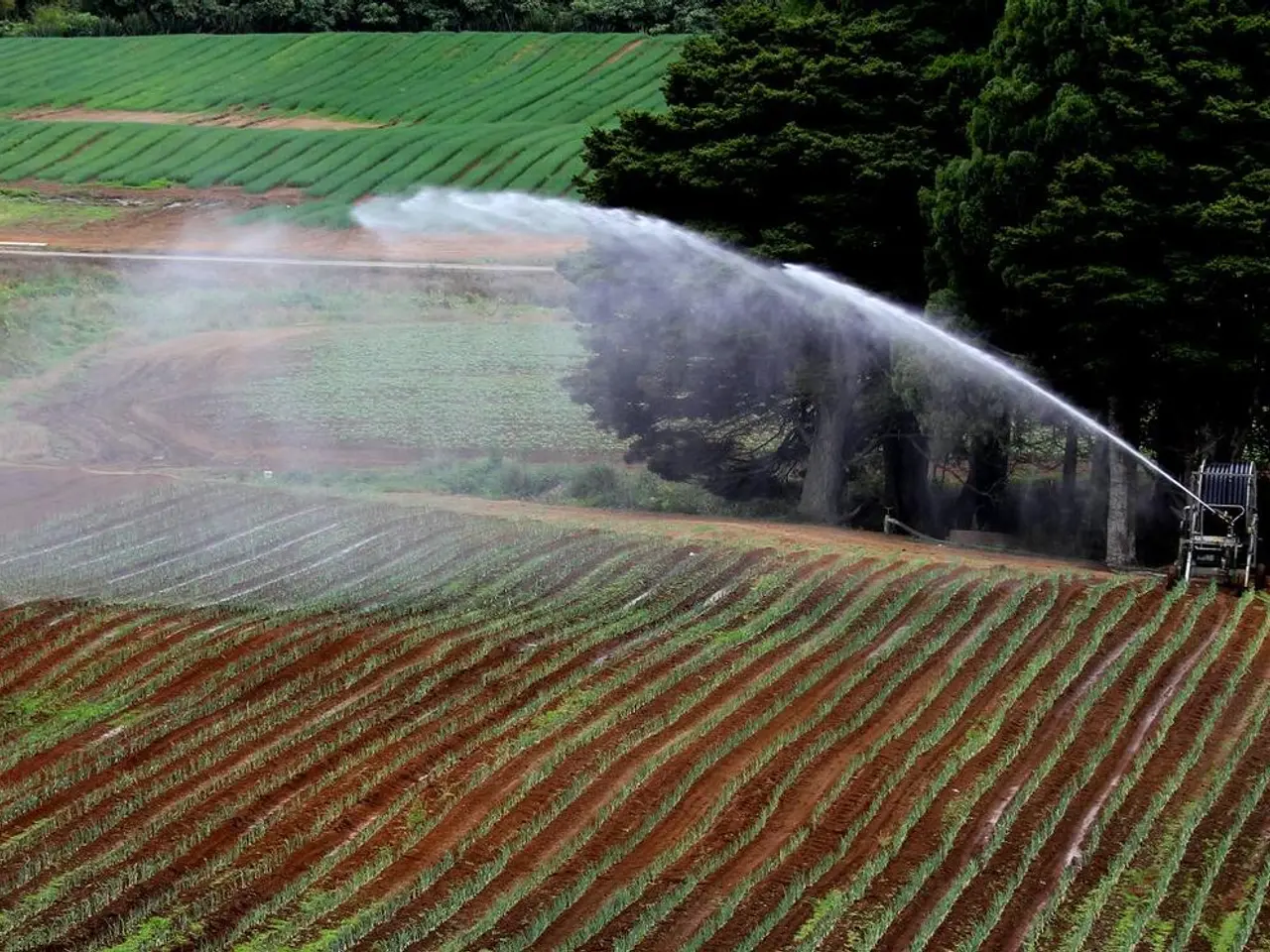
AI-powered drones and sensors in agriculture are collecting and analysing data on crop health, soil conditions, and weather patterns, enabling precision farming practices in emerging economies. This technology is not only boosting production efficiency but also minimising waste and conserving resources. In the manufacturing sector, AI is streamlining operations, automating routine tasks, and optimising energy use, resulting in safer workplaces and lower greenhouse gas emissions.
General Electric, for instance, uses AI to optimise turbines and power grids, improving energy output by 12% per unit of fuel and reducing emissions by 5–7%. Toyota has deployed AI-powered computer vision on manufacturing floors, cutting repetitive strain injuries by 15% and boosting line efficiency by 10%. BMW has enhanced quality control using AI for paint and alignment inspection, reducing defect rates by 32% and inspection times by 28%.
AI's role extends beyond the factory floor. In finance, AI automates fraud detection and risk assessment, such as Mastercard's AI system that evaluates transaction fraud with over 90% accuracy. Healthcare is another sector where AI accelerates diagnoses and personalises care; AI tools have identified tumours years earlier than traditional methods and predict lung cancer risk up to six years in advance.
Enterprise Resource Planning (ERP) systems have integrated AI to improve supply chain management and pricing strategies. SAP’s AI tools automate supplier scoring, purchase order adjustments, and route planning. AmerisourceBergen, a pharmaceutical wholesaler, leveraged AI to reduce manual pricing analysis time drastically, enabling price team members to focus on higher-value tasks.
Microsoft’s AI deployments exemplify broad industrial applications. Financial services firms use AI to automate customer service tasks, enhance data management, and improve chatbot language capabilities, leading to faster response times and better customer retention.
However, the integration of AI into traditional industries is not without challenges. Data privacy, workforce displacement, and the digital divide are some of the issues that need to be addressed. Opportunities lie in expanding AI’s role in predictive maintenance, sustainability, and personalised customer experiences, providing a competitive advantage for industries willing to invest thoughtfully.
An inclusive dialogue among stakeholders can help develop frameworks to mitigate these risks and maximise AI benefits. Leveraging past experiences and ongoing research can help chart a course towards a more sustainable and prosperous future. The evolution of AI, as seen in recent developments and discussions, points towards a future where AI can not only drive efficiency but also support environmental conservation efforts. The goal is to harness AI to not only achieve immediate goals but also lay the groundwork for enduring success and sustainability.
References: 1. General Electric Case Study 2. Tumour Detection and Lung Cancer Prediction 3. AmerisourceBergen Case Study 4. Microsoft AI Deployments
- In the context of environmental conservation, artificial intelligence (AI) could potentially revolutionize the field of environmental science by predicting climate-change patterns more accurately with the help of advanced AI tools, similar to how AI has been used in healthcare to identify tumors earlier than traditional methods.
- As the integration of AI in various industries accelerates, it is crucial for bloggers to discuss the role of AI in promoting sustainable practices, such as its impact on precision farming in emerging economies which minimizes waste and conserves resources, in addition to its contributions to efficiency and automation.
- With the rise of AI, the intersection between AI, science, technology, and the environment becomes increasingly important. By developing AI models that prioritize sustainability and predictive maintenance, industries can not only improve their operations but also contribute to the long-term health of the climate and environment, making it a key focus area for both researchers and policymakers in the field of environmental-science.




