
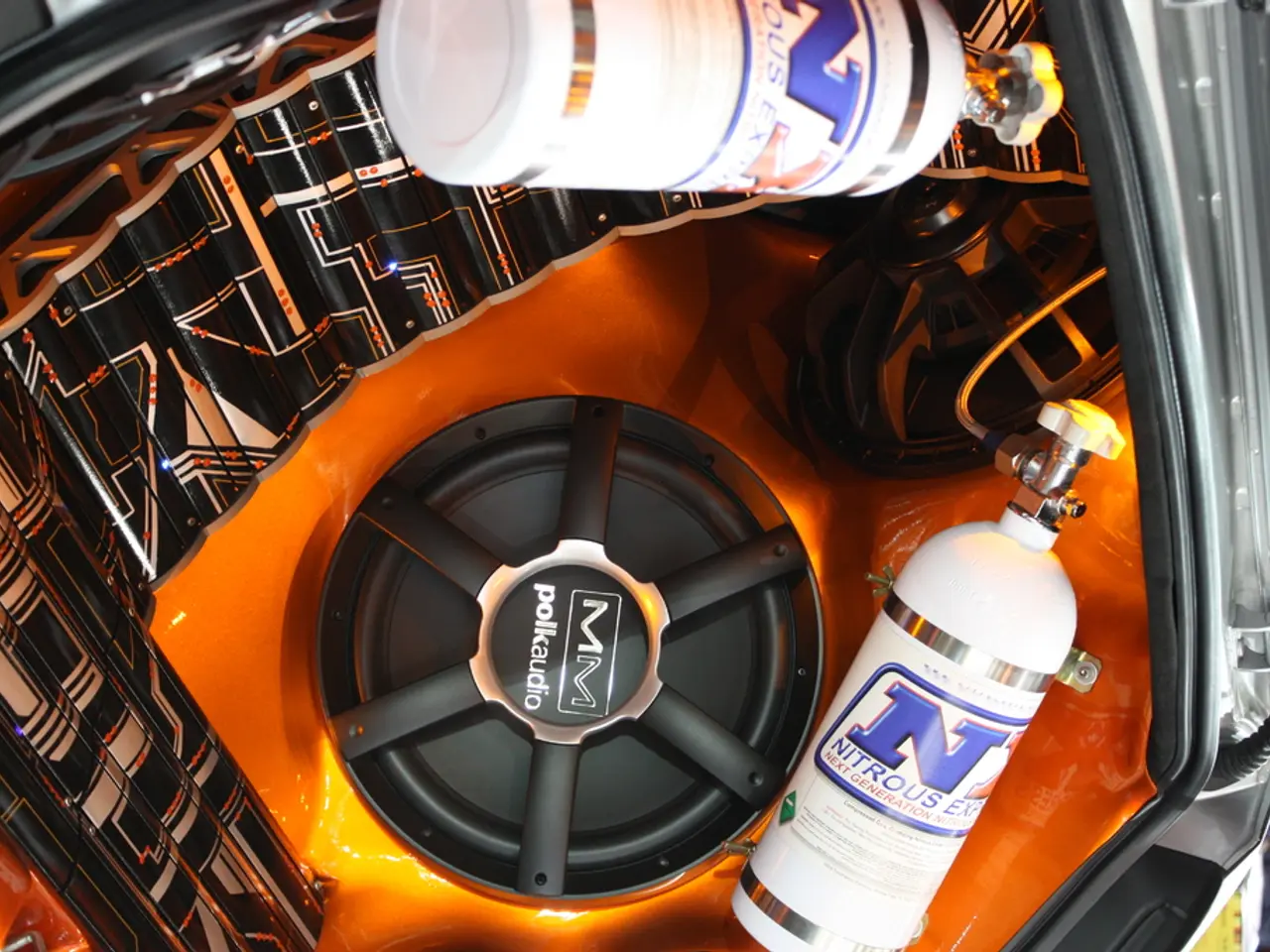
Determining the Ideal Bass Boost: Quantifying the Number of Subwoofers Needed for Your Car Audio System
The world of car audio systems can be an exciting one, but the cost of subwoofers, amplifiers, enclosures, and professional installation can significantly add to the overall expenditure. In this article, we'll help you navigate the key factors in choosing the number of car subwoofers that best suit your music preferences, vehicle size, and audio goals.
### Music Genre Plays a Role
When it comes to music, genre plays a crucial role in determining the ideal number of subwoofers. Bass-heavy genres such as Hip-Hop, EDM, and Hard Rock benefit from powerful, low-frequency output. A single high-quality 10" or 12" subwoofer in a properly tuned enclosure can deliver satisfying bass, but for those seeking earth-shaking lows, two subwoofers (or a larger, more powerful single sub) may be preferable. On the other hand, genres like Jazz, Acoustic, and Classical generally require less emphasis on deep bass, with a single, well-matched subwoofer often sufficing to fill in the low end without overpowering the music.
### Vehicle Size Matters
The size of your vehicle also plays a significant role in determining the number of subwoofers you need. Compact cars have limited space, making ultra-slim, under-seat powered subwoofers like the Rockville RW10CA ideal, providing substantial bass without sacrificing passenger or cargo room. One subwoofer is typically sufficient unless you are seeking extreme output.
Sedans and mid-size SUVs have more cabin space, allowing a single 10" or 12" sub in a properly sized enclosure to deliver balanced bass. If you desire more impact, especially in larger cabins, adding a second subwoofer can help distribute bass more evenly.
Large SUVs, trucks, and vans have more air to move, so one powerful subwoofer (15" or dual 12") or multiple subwoofers may be necessary to achieve full, room-filling bass.
### Audio Goals Influence Decision
Your audio goals also play a role in determining the number of subwoofers you need. If you prioritize sound quality, a single subwoofer in a sealed enclosure is often best, emphasizing clarity and blending well with your main speakers. If you want to feel the bass physically and play at high volumes, multiple subwoofers (or a single, very high-output model) in a ported or bandpass enclosure can deliver the desired impact. Space-conscious users should consider slim, powered subwoofers that fit under seats for a good balance of performance and practicality.
### Typical Subwoofer Configurations
| Vehicle Size | Music Genre | Audio Goal | Recommended Subwoofer Setup | |-------------------|------------------------|----------------------|--------------------------------------------| | Compact | All | Balanced/Space-Saving| 1 slim powered 8"–10" sub (under seat)[1][5]| | Compact | Bass-Heavy | Max Output | 1 high-power 10"–12" sub or 2 slim 8"–10" | | Sedan/SUV | Balanced | Sound Quality | 1 quality 10"–12" sub in sealed box[5] | | Sedan/SUV | Bass-Heavy | Max Output | 2x 10"–12" subs or 1x 15" sub | | Large SUV/Truck | All | Balanced | 1–2 powerful 12"–15" subs | | Large SUV/Truck | Bass-Heavy | Extreme Output | Multiple 12"–15" subs, high-power amp |
### Additional Considerations
- Installation & Wiring: More subwoofers require more space, heavier wiring, and a more powerful amplifier. Oversizing can lead to imbalanced sound and wasted resources. - Driver & Passenger Comfort: In small cars, excessive bass can overwhelm the cabin; in larger vehicles, it may be needed to fill the space. - Budget: Higher-quality subwoofers (or multiple subs) and supporting equipment (amps, wiring, enclosures) increase cost.
### Summary
Most drivers are satisfied with a single, well-chosen subwoofer matched to their vehicle and musical preferences. Bass enthusiasts or those with large vehicles might benefit from two subwoofers or a single, larger, high-output model. Space-conscious users should consider slim, powered subwoofers that fit under seats for a good balance of performance and practicality.
Ultimately, start with one subwoofer and upgrade only if your goals aren't met. Listen to your system, assess how the bass integrates with your music and car acoustics, and adjust as needed. Personal preference plays a role in the decision about how many subwoofers are needed. Some audio enthusiasts might prefer a heavier bass presence, while others may prioritize clarity and accuracy.
Subwoofers in a car audio system reproduce low-frequency sounds, providing a visceral bass effect that standard speakers struggle to achieve. Different subwoofer configurations can impact sound quality. A single subwoofer system offers a well-rounded bass experience, while a dual subwoofer system creates a fuller sound with more pronounced bass. It's essential to adjust head unit settings according to the subwoofer configuration for optimal performance.
Sealed enclosures offer tighter, more precise bass, ideal for music that requires accuracy, while ported enclosures allow for a louder, boomier sound, often preferred by those who enjoy bass-heavy music. A well-built enclosure significantly impacts the subwoofer's performance. Dual subwoofers might need a larger enclosure that can accommodate their size and power needs.
The power handling and amplification of the audio system should be considered. Matching subwoofers to an appropriate amplifier ensures they can perform without distortion. The type of enclosure chosen for subwoofers significantly affects their performance and the quality of sound produced. When choosing an amplifier for subwoofers, consider its wattage output and compatibility with the subwoofers' impedance rating.
The number of subwoofers needed depends on the type of music one listens to. Bass-heavy music might benefit from two subwoofers, while acoustic or vocal music might suffice with a single subwoofer. Amplifiers for subwoofers range in cost from $100 to $400. Professional installation for a car audio system can cost between $100 and $200.
Professional installation can provide tailored advice and optimize the performance of a subwoofer system. The size of the vehicle is an essential factor to consider. Compact cars might need only one subwoofer, while mid-size to large vehicles might require two for a balanced and powerful bass response. Subwoofers enhance the overall listening pleasure by bringing depth and richness to music, offering accurate frequency response.
The cost of a single subwoofer ranges from $80 to $300, while a dual subwoofer kit can cost between $200 and $600. Hiring a professional for installation is recommended if you are uncertain about electrical systems or the proper installation techniques, as improper installation might lead to damage or poor sound quality. Mixing different subwoofer sizes or brands in a car audio system is generally not recommended due to potential uneven sound performance. The available space for installation is crucial. Limited space might necessitate a single subwoofer that remains powerful without overwhelming the limited space.
- For music genres that require substantial low-frequency output like Hip-Hop, EDM, and Hard Rock, two subwoofers or a larger, more powerful single sub may be preferable, while a single, well-matched subwoofer often suffices for Jazz, Acoustic, and Classical genres.
- In compact cars, one slim powered 8"–10" subwoofer (under seat) may be sufficient, but for bass-heavy music or high volume playback, a high-power 10"–12" sub or two slim 8"–10" subwoofers might be needed.
- Sedans and mid-size SUVs generally require a single 10" or 12" sub in a properly sized enclosure for balanced bass, while two subwoofers can help distribute bass more evenly in larger cabins.
- Large SUVs, trucks, and vans may need one powerful subwoofer (15" or dual 12") or multiple subwoofers to achieve full, room-filling bass, depending on audio goals and the desired impact.




