
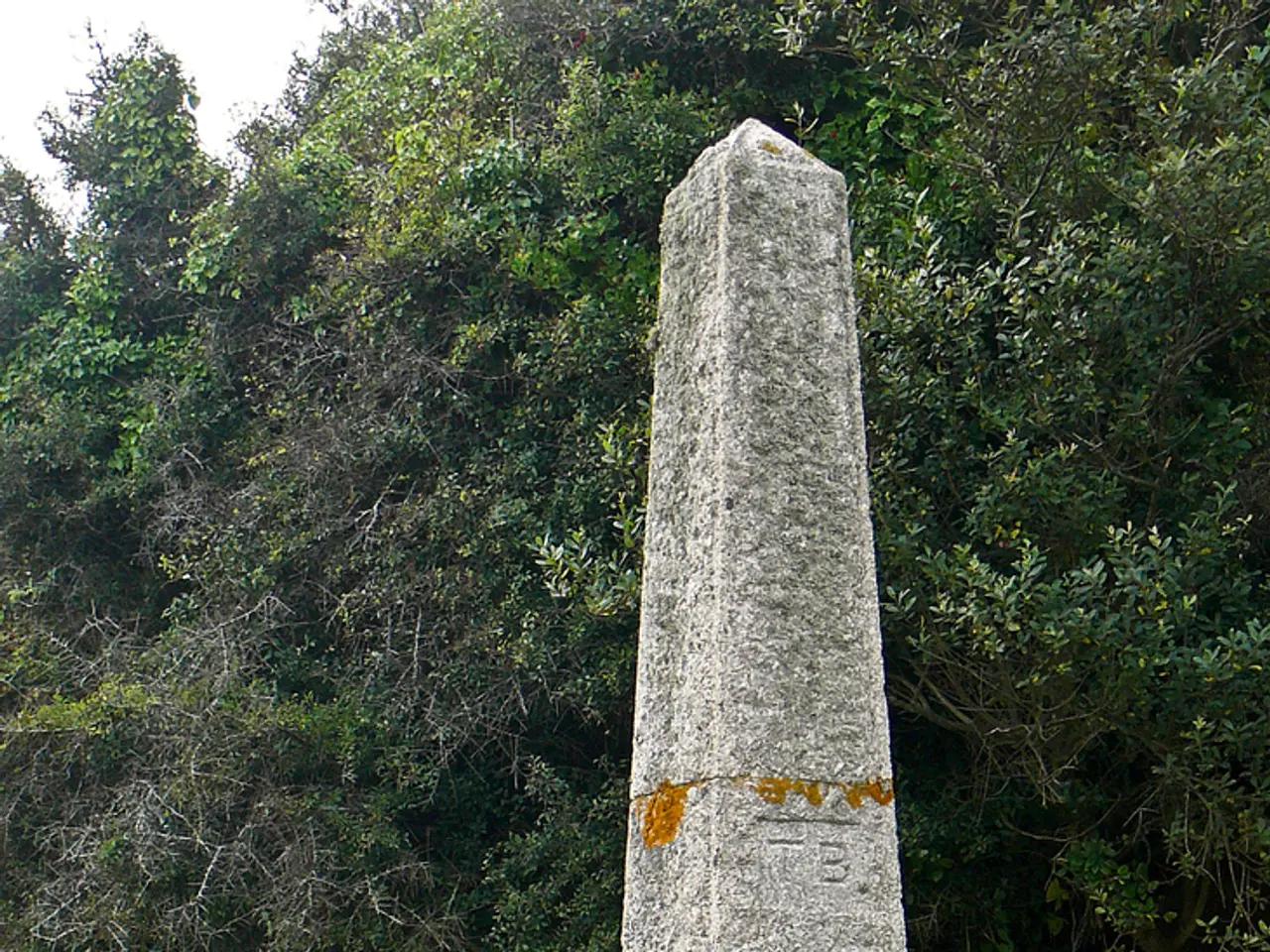
England Designates Dudderhouse Hill Long Cairn a 5,000-Year-Old Historic Site
In the heart of the Yorkshire Dales National Park lies a remarkable Neolithic monument, the Dudderhouse Hill long cairn. Estimated to be around 5,000 years old and possibly older than Stonehenge, this prehistoric structure is one of England's oldest human-made structures[1][2][3].
The significance of the Dudderhouse Hill long cairn lies in its status as a prehistoric funerary monument with intact chambers[1]. It offers a unique glimpse into the lives, deaths, and beliefs of England's first farming communities[1][2][3].
However, the cairn has suffered damage over the years, notably with stones removed to create way-markers for walkers[1]. In response, the Dudderhouse Hill long cairn was officially recorded in 2008 and, more recently, in 2025, it was granted Scheduled Monument status, the highest heritage protection designation in England[1][4].
This status makes the Dudderhouse Hill long cairn a nationally important archaeological site, legally protected against unauthorized change or damage[1][4]. The challenges in preserving the cairn include damage caused by stone removal, vulnerability to ongoing disturbance from visitors, and natural erosion[1][4].
To address these challenges, Historic England and the Yorkshire Dales National Park Authority have launched initiatives such as the Missing Pieces Project, encouraging public contributions to help better understand and preserve the site[4]. The aim is to protect this ancient monument from further deterioration by increasing public awareness and undertaking restoration work, now supported by its Scheduled Monument protection[1][4].
The Dudderhouse Hill long cairn, thought to predate Stonehenge, is a rare example of a Neolithic marker built by a community[1]. It measures approximately 75-feet long by 39-feet wide and is three-feet tall, with a partly turf-covered oval mound of stones remaining today[1].
Myra Tolan-Smith, the Historic England listing adviser for the North region, discussed the protection of the Dudderhouse Hill long cairn with The Art Newspaper[5]. The new status is expected to raise awareness about its importance and vulnerability, shedding light on the lives of early farming communities in England[1].
References:
- The Guardian
- BBC News
- Historic England
- Historic England
- The Art Newspaper
- The Dudderhouse Hill long cairn, an archaeological site dating back to the Neolithic era, showcases art in the form of intriguingly designed ancient structures, making it a subject of interest for both general news and art enthusiasts alike.
- Although primarily known for its historical significance, the Dudderhouse Hill long cairn also intertwines with environmental science as researchers study the impact of environmental factors on its preservation.
- Beyond archaeological and historical importance, the Dudderhouse Hill long cairn serves as a symbol of human advancement, linking the past with modern fields of science, technology, and medical-conditions, as scientists probe its origins to uncover secrets about early human civilization.
- Moreover, space and astronomy enthusiasts may find relevance in the Dudderhouse Hill long cairn as some hypotheses propose that its positioning aligns with celestial bodies, demonstrating the ancient community's understanding of the cosmos.




