
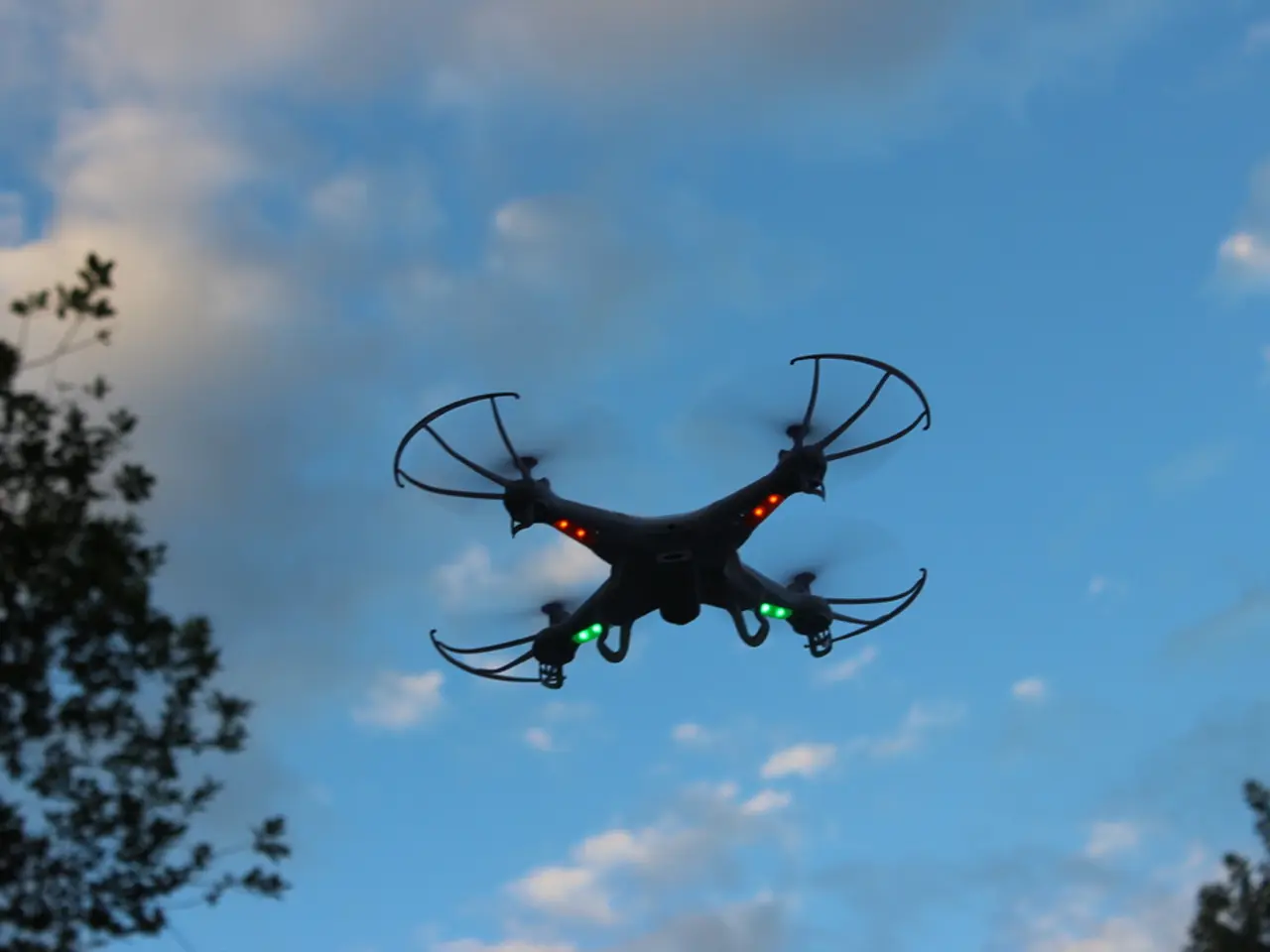
Exploring Lucrative Drone Ventures in the Year 2025
The drone industry is soaring to new heights, with a projected market growth from $17.34 billion in 2025 to over $65 billion by 2032. This transformation is driven by a combination of technological advancements, regulatory progress, and new commercial applications.
Understanding Drone Regulations and Certifications
For those looking to fly their drones commercially, obtaining Part 107 Certification is a must. This certification ensures that pilots have the necessary knowledge and skills to operate drones safely and effectively. It's also important to maintain the currency of this knowledge by taking recurrent training every 24 months.
Investing in the Right Equipment
Considering future scalability is key when investing in drone equipment. Sticking with cutting-edge technologies or modular designs that allow for operation in multiple industry spaces can provide a competitive edge.
Key Trends and Innovations
One of the most significant trends is the growth of fully autonomous drones with beyond visual line of sight (BVLOS) capabilities. These drones enable wider commercial use without direct operator control, paving the way for increased efficiency and productivity.
Hardware improvements, particularly in propulsion systems, payloads (cameras, sensors), and airframes, are also a key focus. These enhancements support diverse commercial applications such as inspection, surveillance, and delivery.
Rapid expansion of drone software platforms for mapping, data analytics, and autonomous operation is another trend. These advancements improve operational efficiency and enable new use cases.
Agriculture Drones
In the agricultural sector, drones are being used for precision crop monitoring using multispectral and thermal cameras, and automated precision spraying for fertilizer and pesticides. These innovations drive sustainability and crop yield increases.
Diverse Business Models
The drone industry is seeing the flourishing of diverse business models, including aerial photography, real estate marketing, agricultural monitoring, infrastructure inspection, delivery services, and drone pilot training.
Innovations in Drone Delivery Technology
Innovations in drone delivery technology include hybrid airframes combining rotors and wings for efficiency and precision, centimeter-level GPS navigation, obstacle detection with real-time sensing, and integration with 5G networks enhancing communication and fleet control.
New Regulatory Frameworks and Certifications
The development of new regulatory frameworks and certifications, such as Blue and Green lists, supports safe BVLOS operations and broader adoption across industries. AI-powered tools, LTE connectivity, and enhanced obstacle avoidance also enable more reliable autonomous missions.
Choosing the Right Idea
To succeed in this dynamic industry, it's crucial to research local and global demand to analyze market trends. Profiling existing businesses in a detailed competitor analysis can help understand what is working and how to differentiate your approach.
Embracing Continuous Learning and Innovation
Keeping up with industry trends and changing regulations is essential for staying competitive.
Drone-Based Security Surveillance
Organizers managing large crowds or property owners of commercial or industrial sites may seek drones for real-time monitoring and threat detection.
Environmental Monitoring
Drones are also used for environmental monitoring, including landscapes for fires, evaluating wildlife habitats, tracking deforestation, and assessing environmental impacts.
Top Drone Models for Search and Rescue Operations
Top drone models for search and rescue operations include the DJI Matrice 30T and Autel EVO Max 4T.
Evaluating Startup Costs and ROI
It's important to check the numbers! Breaking down equipment and other startup costs compared to average income potential can help estimate potential net profit and set price point expectations by researching existing market rates.
Drone Rental Business
Renting UAVs and related equipment to hobbyists and professionals is a source of passive income. Online rental marketplaces like ShareGrid can be utilized.
Drone Pilot Training and Education
Offering workshops, training courses, and certification preparation for aspiring drone pilots can be profitable. Educational institutions often contract out for pilots to teach their drone programs.
Drone Repair and Maintenance Services
Repairing and maintaining UAV components is in high demand. Potential clients range from individual operators to larger businesses with growing fleets.
Developing Marketing and Networking Strategies
Building a brand from the ground up with a polished website and an engaging social media presence is key. Networking with other professionals in your niche can also open up new opportunities.
The drone industry is becoming increasingly autonomous, data-driven, and integrated with next-generation connectivity, unlocking diverse new opportunities across agriculture, delivery, inspection, and beyond.
- To successfully operate a drone commercially, investors should ensure they obtain the Part 107 Certification, which can be managed through a mobile app designed for trouble-free drone regulatory compliance.
- As the drone industry continues to grow, businesses leveraging cutting-edge technology, such as mobile apps, will have a competitive edge in scaling their operations and catering to diverse industry needs, like autonomous drone delivery services.




