
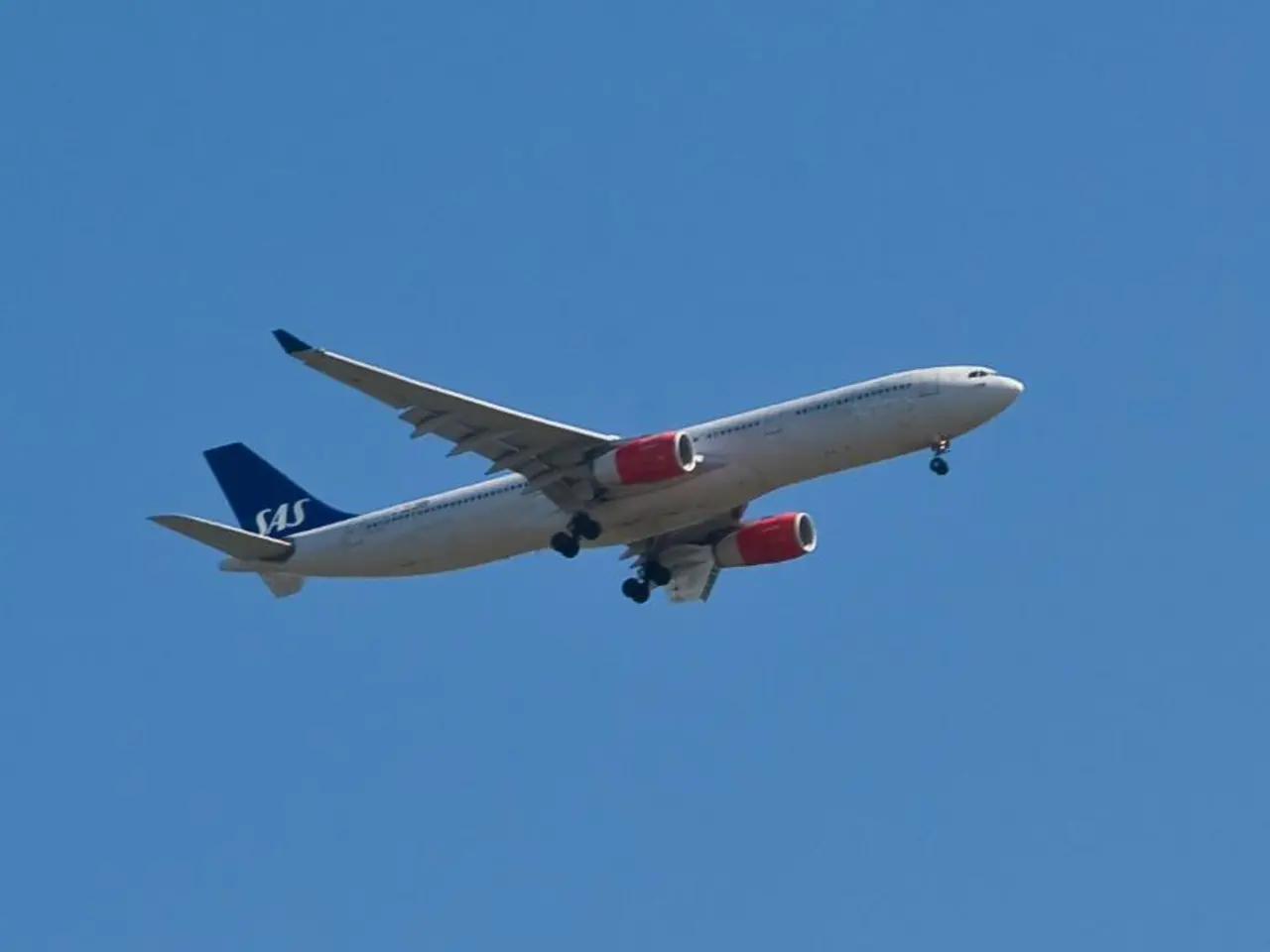
Guidelines for Implementing a Persistent Descent During Final Landing Approach (CDFA)
In the world of Part 91 IFR flying, a technique known as Continuous Descent Final Approach (CDFA) is gaining popularity for its ability to enhance safety, reduce workload, and optimize aircraft performance during non-precision approaches.
CDFA is a method of descending smoothly and continuously from an altitude above the final approach fix (FAF) down to the minimum descent altitude (MDA) or decision altitude (DA), rather than descending in steps and level segments. This technique, when executed correctly, results in a more stable, comfortable, and safe approach for both the pilot and passengers, regardless of flight conditions.
### Implementing CDFA in General Aviation
Implementing CDFA involves careful planning, preparation, and execution. Before commencing the approach, pilots should review the approach chart (FAA or Jeppesen) and identify key points such as the FAF, MDA, missed approach point (MAP), altitude restrictions, and any step-down fixes. They should then calculate a desired constant rate of descent and establish a target descent path that continuously descends to the MDA or DA without level-offs.
Both FAA and Jeppesen charts provide FAF and MDA or DA information clearly. To compute a stable descent gradient, pilots can use the distance from FAF to MAP and the altitude difference. Jeppesen charts sometimes provide vertical guidance or depict a recommended glidepath even on non-precision approaches to aid CDFA.
In the cockpit, pilots should configure the aircraft for a stabilized descent at or before reaching the FAF. They should then set the autopilot or manually fly a constant descent rate to the MDA. It's crucial to avoid leveling off at intermediate altitudes; instead, maintaining a smooth descent at a steady vertical speed is key.
### Benefits and Real-World Application
CDFA offers numerous benefits. It reduces workload and pilot fatigue by streamlining the descent profile, enhances safety by reducing the risk of altitude deviations and potential controlled flight into terrain (CFIT), and decreases noise and fuel consumption due to fewer power changes and level flight segments.
Many flight schools and instrument training programs now emphasize CDFA as a best practice for non-precision approaches. Some FAA guidance and industry standards promote CDFA to align non-precision approaches more closely with precision approach procedures.
While CDFA is not required for Part 91 pilots, it is strongly encouraged by the NTSB and FAA to reduce the risk of accidents. Pilots should practice CDFA in simulators or with flight instructors to gain proficiency.
CDFA is different from the traditional "dive and drive" method where the pilot descends to MDA quickly and then levels off until the MAP. It requires careful planning and altitude management to maintain a stabilized descent path.
When approaching a non-precision approach with multiple stepdown fixes, there are two methods to manage the varying descent gradients: adjusting the descent rate at each stepdown, or delaying the descent until meeting the final descent gradient. If your approach has stepdown fixes inside the FAF, the CDFA method should still be applied, but the specifics may require additional consideration.
In conclusion, CDFA is a valuable technique for pilots seeking to improve safety, efficiency, and performance during non-precision approaches. By understanding and implementing CDFA, pilots can help ensure a smoother, safer flight experience for all.
- The aviation industry is embracing Continuous Descent Final Approach (CDFA), a technique that improves safety, workload, and aircraft performance during non-precision approaches.
- Before executing a CDFA, pilots must carefully plan, prepare, and review FAA or Jeppesen charts for information regarding the FAF, MDA/DA, MAP, altitude restrictions, and step-down fixes.
- To calculate a stable descent gradient for CDFA, pilots can utilize the distance from FAF to MAP and the altitude difference provided in FAA and Jeppesen charts.
- In the cockpit, pilots should configure the aircraft and set the autopilot or manually fly a continuous descent at a constant rate to the MDA, maintaining a smooth and steady vertical speed without leveling off at intermediate altitudes.
- CDFA offers distinct benefits, including reduced pilot workload and fatigue, reduced altitude deviations and the risk of controlled flight into terrain, reduced noise and fuel consumption, and better alignment with precision approach procedures.
- Flight schools and instrument training programs increasingly prioritize CDFA as a key practice for non-precision approaches, as suggested by the FAA and industry standards.
- The National Transportation Safety Board (NTSB) and FAA strongly encourage Part 91 pilots to adopt CDFA to minimize the risk of accidents, and pilots can practice it in simulators or with trainers to build proficiency.
- CDFA differs from the traditional "dive and drive" method in that it maintains a stabilized descent path rather than descending quickly to the MDA and leveling off until the MAP.
- When encountering multiple stepdown fixes in a non-precision approach, pilots can adjust the descent rate at each fix or delay the descent until meeting the final descent gradient for easier management of varying descent gradients.
- By mastering CDFA, pilots can help ensure a more comfortable, safer, and efficient flight experience for passengers, while contributing to the advancement of the aerospace and sports flying sectors, particularly in areas of data-and-cloud-computing and technology.




)