
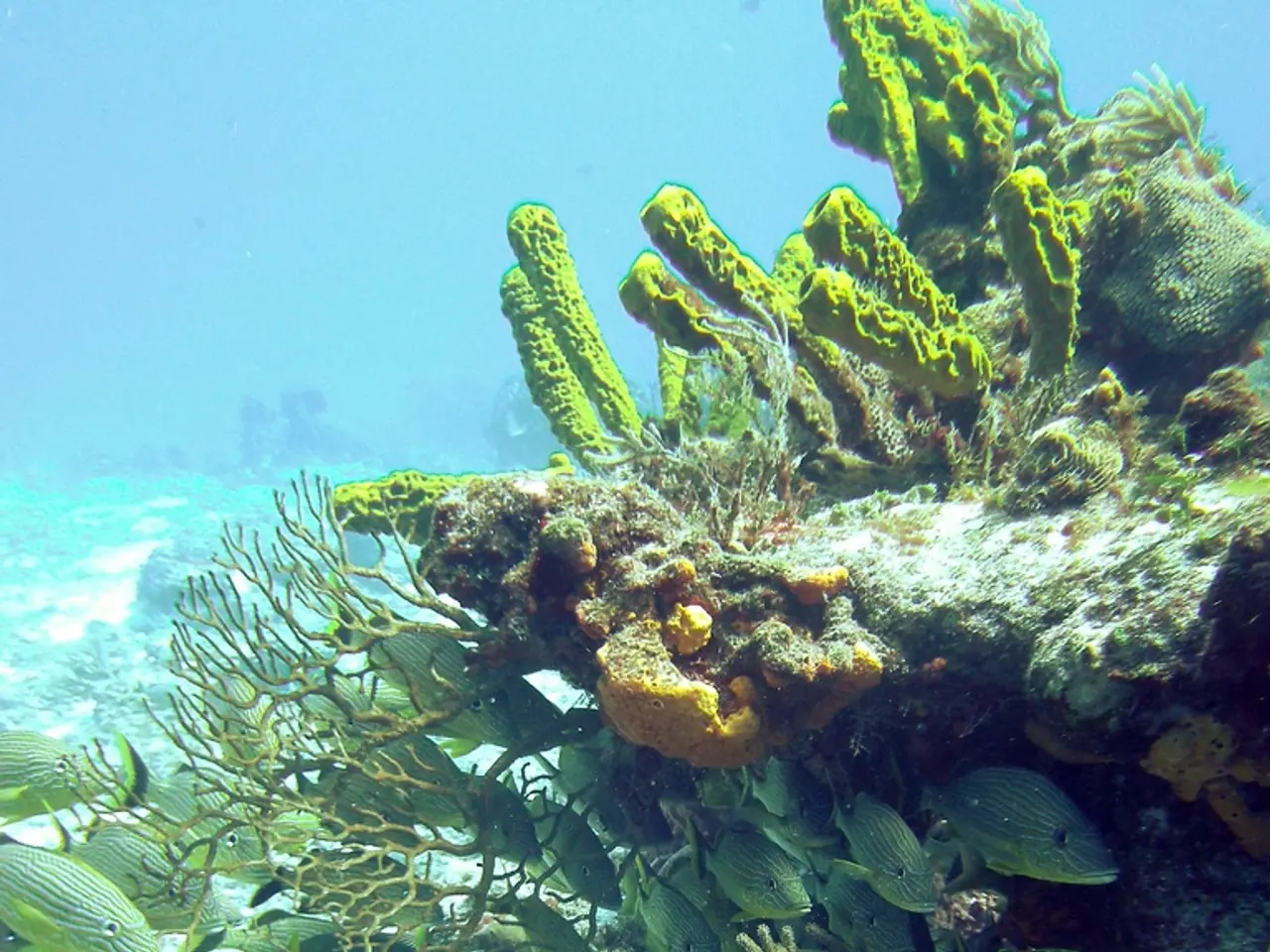
Ocean currents in the deep sea exhibit climate patterns and seasonal shifts, which are currently being explored and better understood by scientists.
Deep-sea currents off the coast of Mozambique have long been a subject of interest for scientists, as they play a crucial role in the movement of sediments, nutrients, and pollutants across the ocean floor. A four-year study led by the UK's National Oceanography Centre (NOC) has delved deeper into understanding these currents, revealing their intricate relationship with surface ocean conditions, seafloor topography, and tidal forces.
The study, published in the journal Nature Geoscience, has uncovered that the behaviour of deep currents is linked to surface-level currents, such as the Northeast Madagascar Current. Seasonal shifts in this surface current can weaken or disrupt the Mozambique Undercurrent at depths up to 1,500 meters (about 4,921 feet). This interaction shows that deep-sea currents vary seasonally and sometimes over short periods, influenced by changing surface conditions.
Underwater topography—like submarine canyons, gullies, and ridges—also plays a critical role in shaping the direction and strength of near-bed currents. These features cause variability in current patterns, including reversals and fluctuations influenced by tides. Dr. Ian Kane, co-author of the study, compared observing deep-sea currents to observing the weather in Manchester, highlighting their unpredictable and ever-changing nature.
The study used 34 deep-sea sensors anchored 2.5 kilometers (1.5 miles) below the surface to gather data on the currents. Dr. Mike Clare, lead scientist of the study from the National Oceanography Centre, explained that understanding the behaviour and pathways of deep-sea currents helps identify where pollution is coming from, which ecosystems it will interact with, and how to make sense of the records preserved in deposits.
The findings of this study are significant for improving ocean current models. By understanding how deep-sea currents behave, scientists can better predict the movement of sediments, nutrients, and pollutants, which has practical implications for marine life, carbon storage, and the spread of human-made trash. The new study aims to shed light on a little-known deep-sea environment, paving the way for future research and conservation efforts.
- The research conducted by the National Oceanography Centre (NOC) has advocated for the importance of environmental-science in understanding deep-sea currents off the coast of Mozambique, as they greatly influence the movement of sediments, nutrients, and pollutants across the ocean floor.
- The study, utilizing data-and-cloud-computing with 34 deep-sea sensors anchored deep beneath the surface, has illuminated the dynamic and unpredictable nature of deep-sea currents, emphasizing their link to surface-level currents and underwater topography.
- The findings of the four-year study show that deep-sea currents behave differently seasonally and over short periods, influenced by climate-change factors like surface conditions, making it essential for scientists to continue integrating technological advancements, such as science and technology, to monitor and model the deep-sea environment for marine life and carbon storage preservation.
- IoT sensor networks attached to the ocean floor can contribute to the long-term monitoring of these currents, enabling researchers to analyze changing patterns, reveal environmental impacts, and stimulate future environmental-science and technology advancements in climate-change research.




