Stella McCartney's 'Fevvers' Signal Feather-Free Future in Fashion
The fashion industry is witnessing a shift as the movement to phase out feathers gains momentum. Several secondary Fashion Weeks have implemented bans, while designers like Stella McCartney are introducing innovative, animal-free alternatives. McCartney's latest collection showcases 'fevvers', a novel material made from naturally dyed grass blades, replacing real feathers.
McCartney, a long-time advocate for animal-free fashion, has been pushing for change in the industry for over three decades. Her new product, 'fevvers', debuts in two soft pastel gowns and bodices in her latest collection. This isn't McCartney's first foray into sustainable materials. She previously introduced PURE.TECH, a material with air-purifying properties, in her denims. The designer also uses UPPEAL, made from apples, and Econyl, derived from nylon waste fabrics and fishing nets.
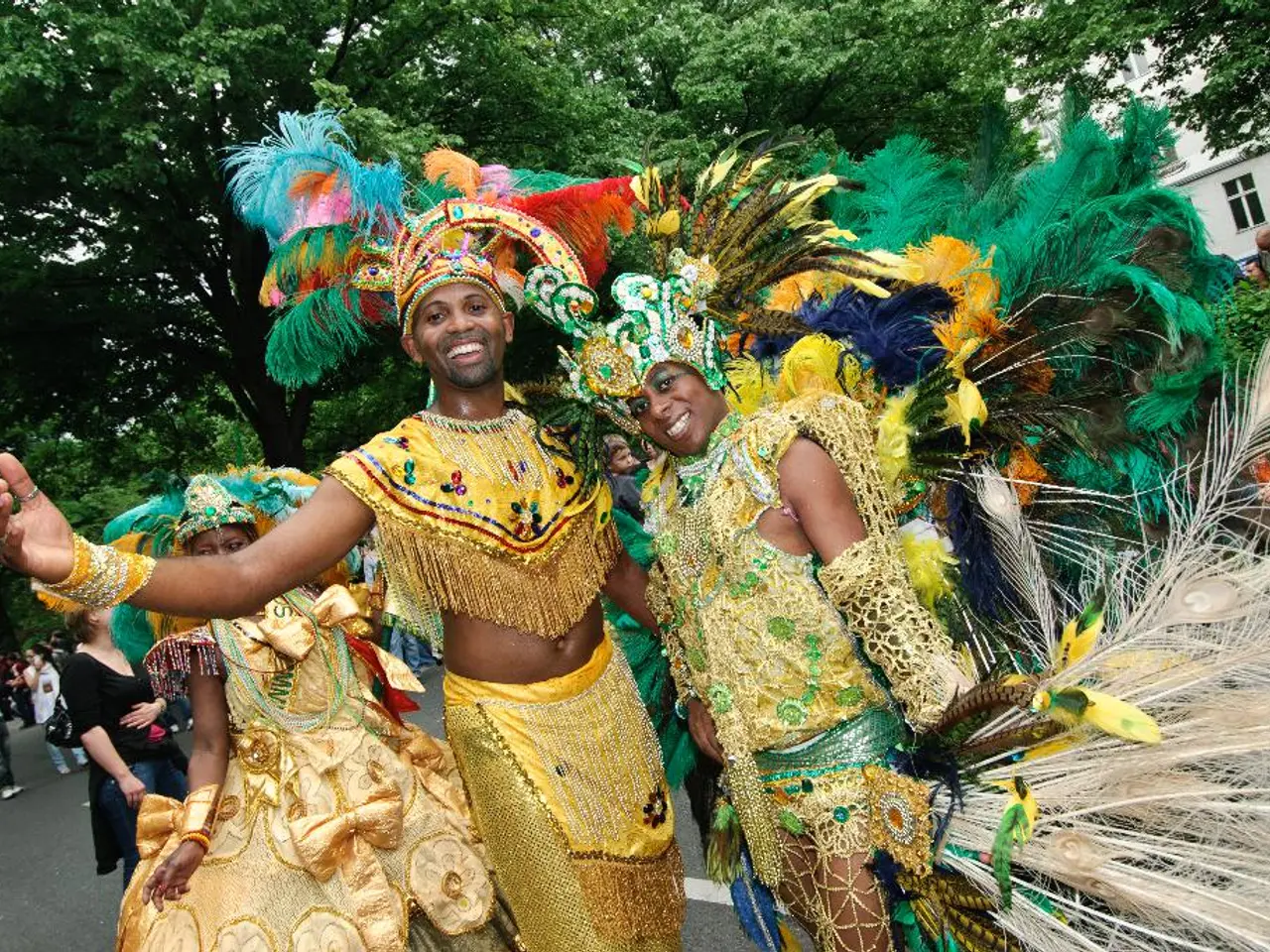
Historically, feathers have been a staple in fashion, even considered a status symbol in the 19th century. Today, they're still used, mainly from farmed ostriches, but campaign groups criticize the rearing conditions. Slaughtered chickens and ducks from the poultry industry also supply feathers for down jackets.
The ban on feathers in several secondary Fashion Weeks and Stella McCartney's introduction of 'fevvers' signal a significant step towards a more sustainable fashion industry. McCartney's commitment to innovative, animal-free materials like 'fevvers', PURE.TECH, UPPEAL, and Econyl demonstrates a promising path forward. As the industry evolves, consumers can expect to see more sustainable alternatives on the runway.
Read also:
- Mural at blast site in CDMX commemorates Alicia Matías, sacrificing life for granddaughter's safety
- Germany Boosts EV Charging: 1,000 Fast-Charging Points on Motorways by 2026
- Green Faction Slams Saarbrücken Mayor's Automotive Focus
- Increased energy demand counters Trump's pro-fossil fuel strategies, according to APG's infrastructure team.