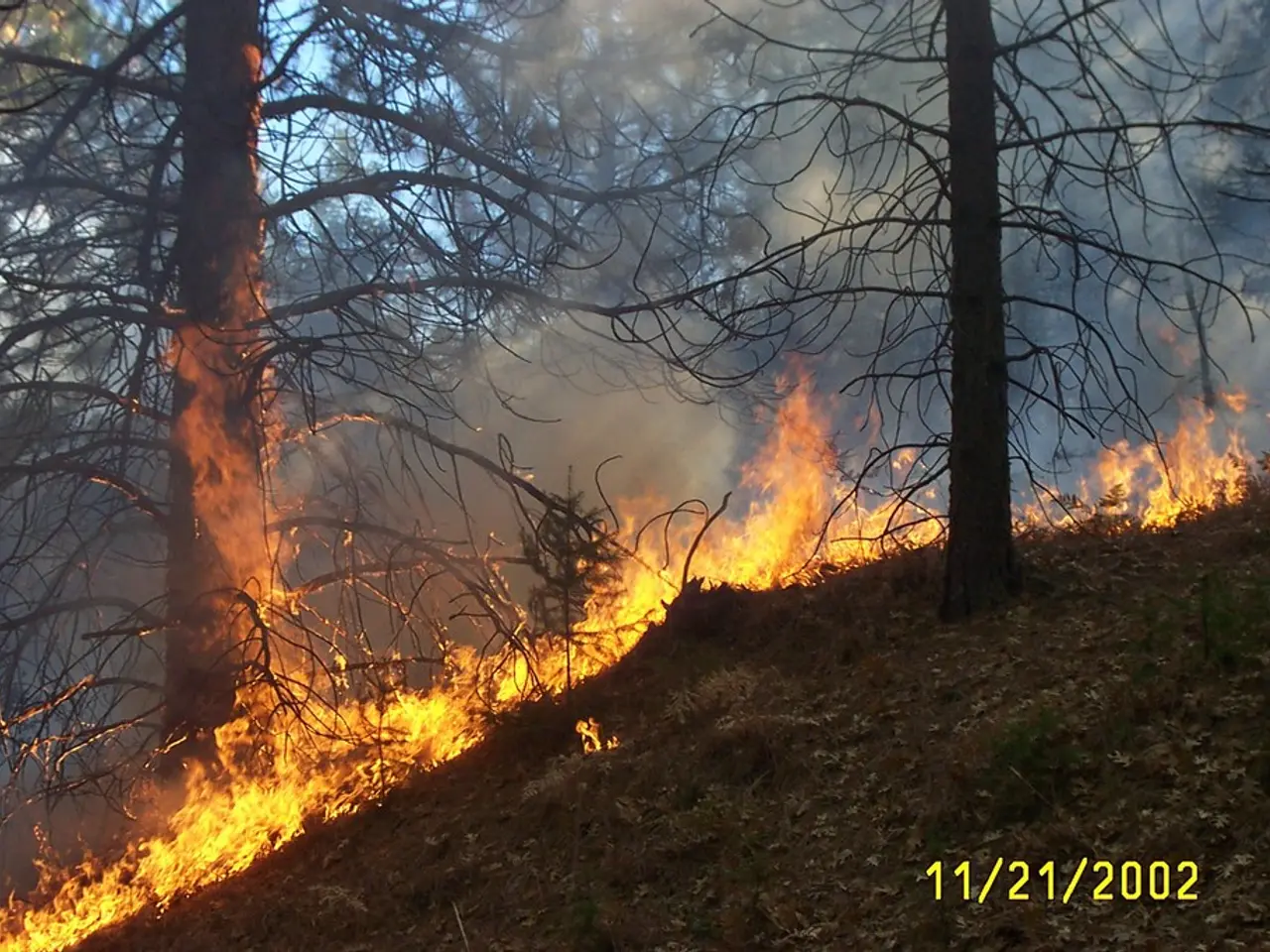
Techniques for Managing Wild Forest Fires
In the face of climate change, forest fires pose a significant threat, particularly in regions like Brandenburg, Germany, known for their pine forests and sandy soils. However, modern technology is increasingly being utilised to combat this threat, with drones playing a pivotal role in early detection, monitoring, and firefighting.
OroraTech, a German startup based in Munich, uses satellites to detect fires as small as 4m x 4m. They currently operate more than 25 satellites and plan to launch more, providing real-time data to fire management teams. The FireSat project, backed by Google, aims to detect forest fires worldwide in real-time using a fleet of satellites, with the ability to spot fires as small as a medium-sized room (5m x 5m).
Ground-based sensors, such as those used in Brandenburg, help detect forest fires faster. These sensors, originally developed to recognise dust clouds on Mars, take pictures and analyse them using special software. Dryad's Silvanet system, based in Eberswalde, Brandenburg, uses solar-powered sensors and drones to detect smouldering fires and fight them directly using acoustic waves.
Drones excel at early fire detection due to their ability to hover above difficult terrain, track smoke plumes, and capture high-resolution images with attached GPS data. This provides faster identification of fire starts than traditional methods, such as watchtowers or geostationary satellites, especially in remote or inaccessible areas. Advanced drones can be deployed in large numbers during high-risk periods, surveying vast regions and relaying real-time data to fire management teams, thus minimising response time and potentially containing fires before they spread.
Once a fire is detected, drones enhance situational awareness by providing live video feeds and aerial perspectives. This enables firefighters to assess fire behaviour, track spread, and make informed decisions about resource allocation and evacuation routes. Drones can repeatedly survey the area, offering updated information and supporting operational planning without putting personnel at risk.
While drones are currently less effective than manned aircraft or ground crews at directly extinguishing large fires, they are increasingly used in auxiliary roles. Small drones can carry limited payloads of water or fire suppressants for targeted interventions, but their main value lies in supporting suppression efforts by guiding larger firefighting assets and monitoring hot spots.
Looking to the future, drones are expected to play a larger role in fire prevention. Their ability to patrol areas at regular intervals, monitor for signs of fire risk, and support prescribed burns ensures a proactive approach to wildfire management. As drone technology advances—with improved autonomy, payload capacity, and sensor integration—they could increasingly supplement or even replace some manned aviation missions, especially in hazardous or remote areas.
In Brandenburg, the FireCrabber firefighting robot has been in use since 2021. It is a small tracked vehicle that can remotely spray up to 2750 liters of water per minute and has an operating time of about six hours. Windracers, a British company, is deploying a swarm of firefighting drones with a wingspan of about nine meters. In Hanau, Germany, a firefighting robot of the type "Magirus Wolf R1" has been presented.
The research project Pyrophob, involving eight German institutions, has found that mixed forests with more broad-leaved trees are more resistant to forest fires in times of climate change. Prevention remains just as important as technology, with experts emphasising the need for continued efforts in this area.
In conclusion, drones are highly effective for early detection and monitoring of forest fires, providing rapid situational awareness and reducing risk to personnel. While direct extinguishing is currently limited, ongoing technological advancements are likely to enhance their role in both suppression and prevention, positioning drones as a cornerstone in the future of wildfire management.
- As climate change continues to pose a significant threat to forests, particularly in regions like Brandenburg, Germany, the use of high tech gadgets such as drones in firefighting becomes increasingly important for early detection, monitoring, and fighting forest fires.
- In the field of environmental science, drones are being harnessed to combat forest fires through projects like FireSat, which aims to detect forest fires worldwide in real-time, using satellites and technology, and Dryad's Silvanet system, which uses solar-powered sensors and drones for direct firefighting.
- The science of climate change and the effects on the environment necessitate innovative solutions, and technology, including drones, play a crucial role in modern firefighting, offering a proactive approach to wildfire management as we look to the future.